
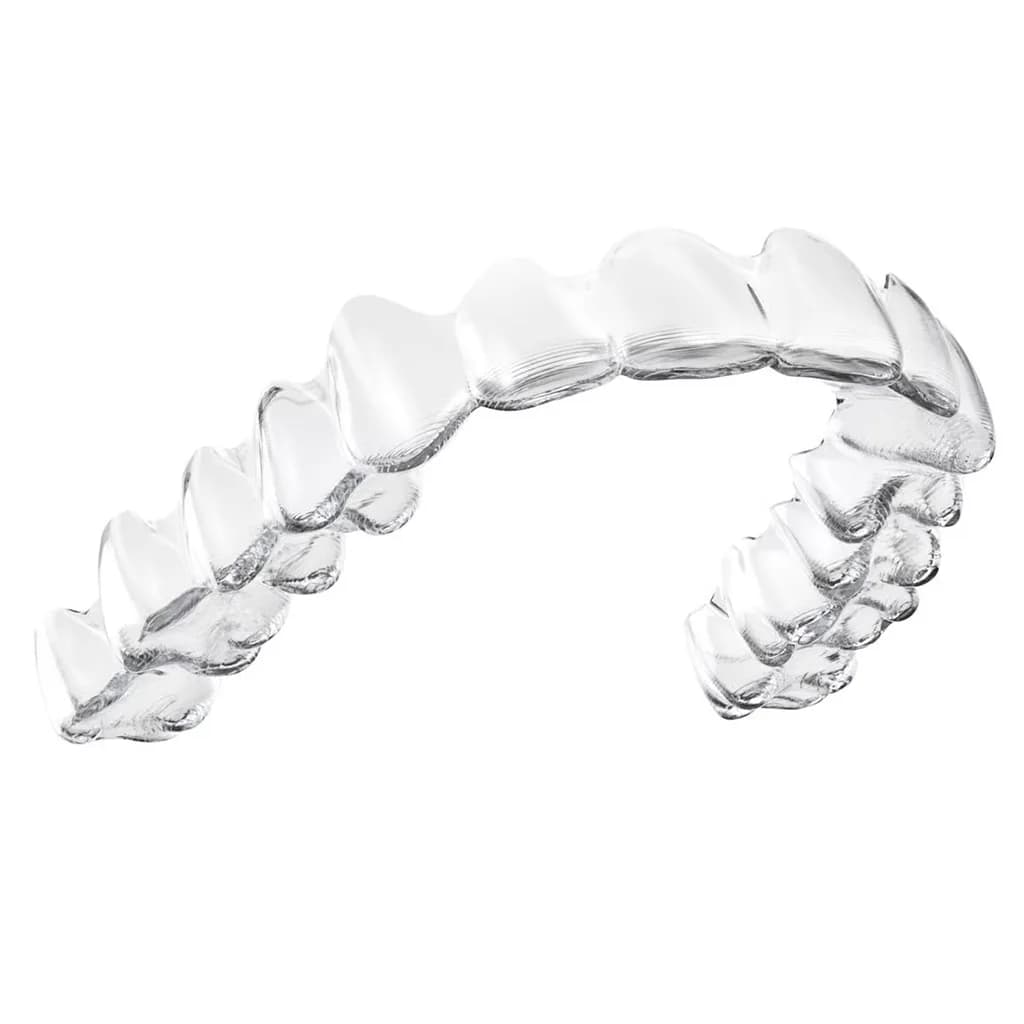
Quick answer: A removable retainer (night retainer) is worn every night without exception during the first year. After that you wear it for life, 3 to 5 nights a week. If you stop wearing it, your teeth almost always shift back towards their old position. At our practice in Amsterdam we work exclusively with this removable retainer.
Introduction
Your brace comes off, finally. But then the question arises: how long does that retainer have to stay in? The short answer: much longer than most people think. A removable retainer is not a temporary aid for a few months, but a lifelong habit that becomes smoother and smoother.
On this page you can read what your retainer schedule looks like, why your teeth so badly want to shift back and what to do when something goes wrong. And you get an honest answer to the question we hear weekly at our practice on the Museumplein in Amsterdam: does that thing really have to stay in forever?
Which retainer do you get from us?
There are roughly two types of retainers in orthodontics. A removable retainer (also called a night retainer) is a transparent tray that clicks over your teeth: you put it in at night and take it out in the morning. There is also a fixed retention wire that is glued to the inside of your teeth.
At Orthodontie Museumplein we deliberately choose the removable retainer. A few reasons:
- You stay in control of your own teeth. A night retainer that you put in and take out yourself is not an invisible measure you forget, it is a daily action that actively connects you to your tooth alignment.
- Hygiene is easier. You can take the retainer out to clean it thoroughly, and at the same time you can floss and brush your teeth unhindered.
- No unexpected breakages. A glued wire can come loose without you noticing; only weeks later does it become apparent that a tooth has started to move. With a removable retainer you immediately feel if something is wrong.
In practical terms, this means the information below is about the removable retainer, the type we give to all our patients.
How long do you wear a retainer? The schedule
The wear schedule winds down in steps, but never stops completely. This is the guideline most Dutch orthodontists follow, based on international research into relapse.
| Period after braces | Wear schedule |
|---|---|
| First 12 months | Every night, without exception |
| From year 2 | 3 to 5 nights a week, for life |
Some patients can manage with less over time; for others the teeth turn out to be sensitive and the retainer has to stay in every night for longer. We see this during your check-up.
Why does that retainer have to stay in for so long?
It may seem excessive, but there is a good reason behind it. A few things that happen in your mouth after braces:
- The bone around your teeth is not yet hard. The tooth roots sit in newly formed jawbone that only fully recovers after 9 to 12 months. During that period teeth move back easily.
- The gingival fibres keep pulling for years. The elastic fibres in your gums remember the old position of your teeth for up to 10 years. They pull gently but continuously.
- Your jaw keeps growing and changing. Even in adulthood your jaw shape slowly changes. The lower front teeth in particular tend to become crooked, even in people who have never had a brace.
In other words: your teeth are in motion throughout your life. A retainer keeps them in the place where you and the orthodontist put them.
What happens if you stop wearing it?
Honest answer: in most cases your teeth slowly shift back. How fast varies from person to person. For some, a slight correction disappears within a few months; for others it takes years before it becomes noticeable. But the direction is almost always the same: back to how it was.
On TikTok and Instagram you increasingly see the hashtag retainer for life: young adults thanking their younger selves for continuing to wear their night retainer, alongside videos of people who put it away after a year and now regret a crooked front tooth. Not the most scientific source, but it shows clearly how often things go wrong without retention.
The rule of thumb we pass on: as long as you want to keep straight teeth, you need a retainer.
Maintenance: how to keep your retainer in good shape
A removable retainer is low-effort to maintain, provided you remember a few things:
- Rinse it with cold water in the morning. Hot water deforms the plastic, and with it the fit.
- Clean it 1 to 2 times a week with a special retainer cleaning tablet or a mild soap. No toothpaste: it scratches the surface and makes the retainer cloudy over time.
- Always keep it in the protective case. Tip: never leave it loose on a tray or a napkin, because a staggering percentage of retainers end up in a restaurant bin that way.
- Avoid heat. Do not leave it in the car on a sunny day and do not store it in a dishwasher.
At each check-up at our practice on the Museumplein we look at the fit and check whether any shifting has taken place.
What do you do when something goes wrong?
Your retainer is lost or broken
Make an appointment for a new one as soon as possible. In the meantime: try to wear your old one if you still have it. No old one left? Do not wait longer than a few weeks; in that time the teeth can already shift slightly, which can make a new retainer feel tight.
Your retainer feels tight or snug
That means your teeth have moved. Wear it a few extra nights (and possibly a few hours during the day) and see if it eases. Still tight after a week? Plan a check-up and we will make a new one.
You have a fixed retention wire from a previous practice and it comes loose
We do not place fixed retention wires, so for repairs it is best to contact the orthodontist who placed it. Would you rather switch to a removable solution? Then we will look during a consultation at whether that is a good step for your teeth.
When can you really wear it less?
After about a year of consistently wearing it every night, we assess during a check-up whether your teeth are stable. Signs that you can scale back to 3 to 5 nights a week:
- Your retainer clicks effortlessly into place every evening (no tight feeling).
- During the annual photos we see no shifting in your front teeth.
- You have no complaints such as pressure pain or a changed bite.
Stopping altogether is something we almost never recommend. The effort of two or three nights a week is small; the regret of teeth that have shifted back is great.
Why choose Orthodontie Museumplein?
Our practice is in the centre of Amsterdam, within walking distance of the Museumplein. We support patients not only during their braces, but also in the years afterwards, because retention is what makes the beautiful end result last. What you can expect from us:
- One clear approach to retention. We work with the removable retainer and explain exactly, when we fit it, how the wear schedule works and what to do if it gets lost.
- Quick help with problems. A lost or broken retainer is not an emergency, but it is something you should not put off too long. We try to schedule you within a few days.
- Clear costs. A new retainer costs about €375 with us. No surprises afterwards.
- Easy to reach. Easily accessible by tram, bike or car from all over Amsterdam and the surrounding area.
Not sure whether your retainer still fits well, or looking for a new orthodontist to take over your retention? Read more on our page about retainers or plan a check-up at our practice in central Amsterdam.
Frequently asked questions
How long do I have to wear my retainer after braces?
Every night without exception during the first year, then for life 3 to 5 nights a week. If you stop altogether, your teeth shift back in most cases.
How much does a new retainer cost if I lose it?
At Orthodontie Museumplein a new retainer costs about €375. You receive a cost overview in advance so you are not faced with surprises.
What happens if I forget my retainer for a few nights?
Missing a few nights is not a disaster, but make up for it the following nights and pick up the schedule again. Notice that the retainer feels tight or is hard to click into place? Then your teeth have already shifted slightly: wear it faithfully for an extra week to get the position back.
Do you also place a fixed retention wire behind the teeth?
No, we deliberately choose not to. We work only with the removable retainer, because it is more hygienic, gives the patient control over their own retention and prevents the risk of unnoticed damage to a glued wire.
Can I whiten my teeth with my retainer in?
With a removable retainer you can often use the retainer itself as a bleaching tray; we discuss this per situation. The whitening is done by your dentist or dental hygienist; we make sure your retainer is suitable for it.
Want to know more or request a no-obligation consultation? Contact our practice in Amsterdam.