
Quick answer: Invisalign is usually the best choice if you want straight teeth without it being noticeable and you have the discipline to wear the aligners 22 hours a day. A fixed brace is more suitable for complex corrections (rotations, large gaps, jaw problems) and if you do not want to think about a wear schedule. The medical outcome is comparable; the choice is mainly about lifestyle and the complexity of your bite.
Introduction
Are you torn between Invisalign and a fixed brace? You are not alone. More and more adults choose orthodontics later in life and want to know which type of brace best fits their work, social life and teeth. Both options deliver a beautiful end result, but the route there differs considerably.
In this article you can read, point by point (visibility, treatment duration, comfort, cost and suitability), what the difference is. By the end you will know which option probably suits you and what to expect from a first consultation with us in central Amsterdam.
What is the difference between Invisalign and a fixed brace?
Invisalign works with a series of transparent plastic trays (aligners) that you click over your teeth. Every two weeks you switch to the next set. Step by step your teeth shift into the desired position. You take them out to eat and to brush.
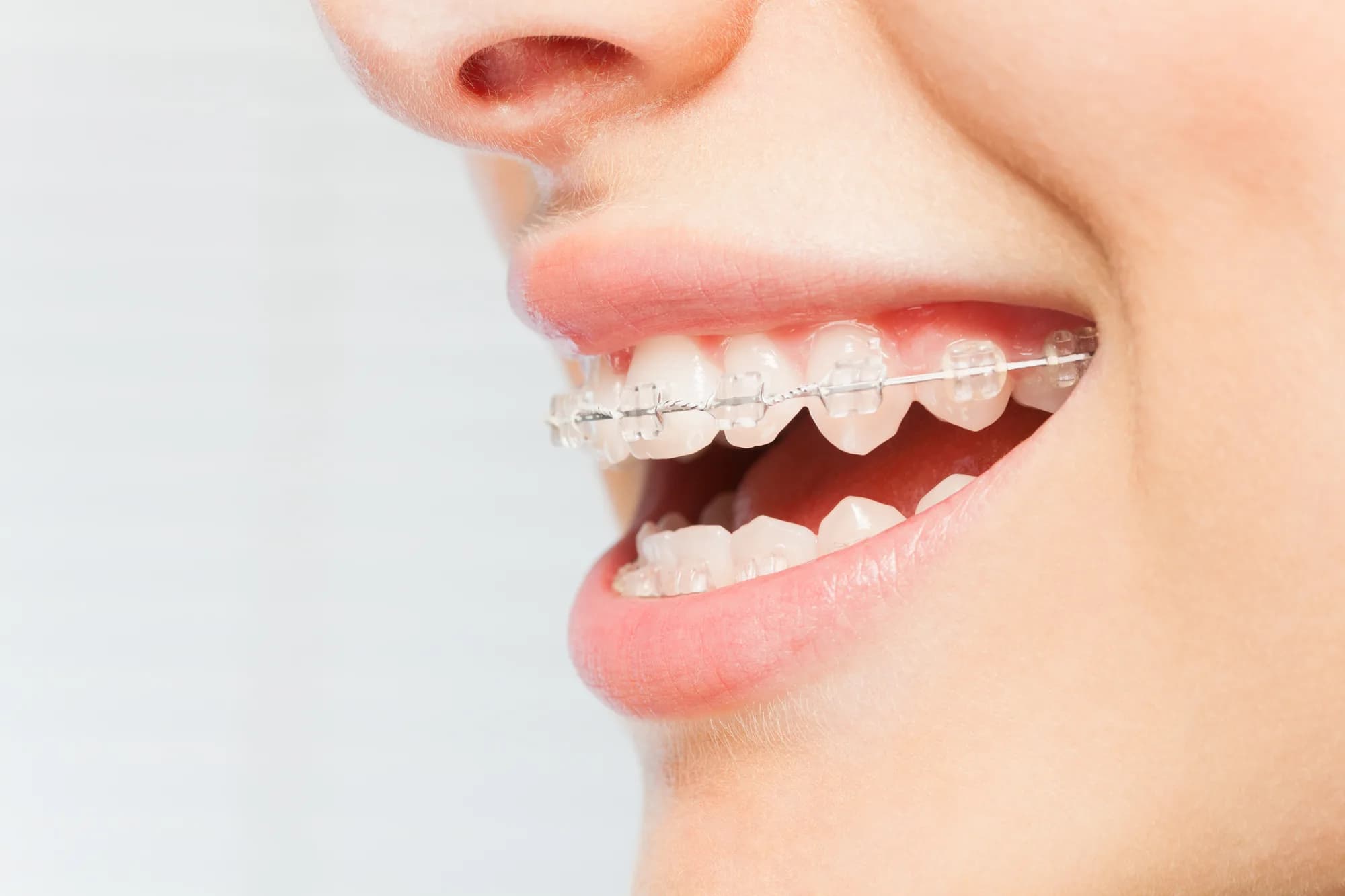
A fixed brace consists of small brackets glued to your teeth, connected by a metal wire. The orthodontist adjusts the wire every 6 to 8 weeks. The brace is fixed 24 hours a day: you do not have to think about it.
The key difference in one sentence: Invisalign is removable and almost invisible, a fixed brace is permanent and visible (though these days you can choose white or clear brackets).
Who is Invisalign a good choice for?
Invisalign is a good fit if you meet these three points:
- Your tooth correction is mild to moderate. For example a mild overbite, small crossbite, small gaps or relapse after an earlier brace.
- You can stick to the wear schedule. Aligners must be in for at least 20 to 22 hours a day. If you take them out often, the treatment lengthens or the end result does not work out.
- Visibility matters to you. For client contact, presentations or simply if you would rather not have brackets in your photos: Invisalign is barely noticeable.
The average treatment duration is between 6 and 18 months, depending on the complexity. For very simple corrections it is sometimes done within 4 months.
When is a fixed brace the better choice?
A fixed brace is usually the right choice in these situations:
- Complex corrections. Strongly tilted or rotated teeth, large gaps, severe overbite, open bite or crossbite call for the precise control that only brackets and wire provide.
- Jaw corrections or extractions. When space has to be created by moving teeth over large distances, a fixed brace works more reliably.
- No interest in a wear schedule. A fixed brace works 24/7 without you having to think about it. For anyone who knows they find the discipline aspect difficult, this is the sure path to the end result.
- Lower budget. A fixed brace is on average 1,000 to 1,500 euros cheaper than Invisalign.
The average treatment duration is 12 to 24 months, depending on what needs straightening.
Comparison in one table
| Aspect | Invisalign | Fixed brace |
|---|---|---|
| Visibility | Almost invisible | Visible (metal or white/ceramic) |
| Treatment duration | 6 to 18 months | 12 to 24 months |
| Number of check-ups | Every 6 to 8 weeks | Every 6 to 8 weeks |
| Eating and drinking | Aligners out, then eat | No restriction, but watch hard and sticky food |
| Oral hygiene | Easy (just brush) | Harder (around brackets and wire) |
| Pain or pressure | Mild, first 1 to 2 days per new set | Mild to moderate, mainly first week and after adjustment |
| Suitable for complex cases | Limited | Yes |
| Discipline required | High (22 hours a day) | Low (fixed) |
| Average cost adults | 4,500 to 6,500 euros | 3,500 to 5,000 euros |
Also read our overview of what a brace costs in 2026 if you want to compare the financial side.
How do you make the right choice?
In practice, three questions usually determine the outcome:
1. What exactly needs to happen medically?
At a first consultation we take photos, impressions or a 3D scan and look at which movements are needed. Sometimes it turns out that Invisalign is technically not the best solution, even if you would prefer it. In that case we explain honestly why a fixed brace gives a better result.
2. What does your daily life look like?
Do you have lots of meetings, client contact or do you appear on stage? Then the visibility of a fixed brace weighs more heavily. Do you have an active sports life with contact sports (kickboxing, football, hockey)? Then aligners are actually safer, because brackets can cut the inside of your lip on impact.
3. How do you feel about discipline?
Be honest: will you really wear aligners 22 hours a day, put them in a case during every meal and brush your teeth before putting them back? If that does not work out, you fall behind schedule and the treatment takes longer. A fixed brace takes that worry off your hands.
Why choose Orthodontie Museumplein?
Our practice is on the Museumplein in the centre of Amsterdam and treats both adults and children. What you can expect from us:
- Honest advice. We do not automatically recommend the more expensive option. If Invisalign does not fit technically or is needlessly expensive for your case, we say so.
- Experience with both systems. We have worked with both classic fixed braces and Invisalign for years. You benefit from the approach that works best for your teeth.
- Transparent costs. Before treatment you receive a written cost overview with all service codes and laboratory costs.
- Easy to reach. Easily accessible by tram, car or bike from all over Amsterdam and the surrounding area.
Want to know which option suits you? Plan a no-obligation first consultation. After about 30 minutes you will know exactly what is needed and what it costs.
Frequently asked questions
Is Invisalign as effective as a fixed brace?
For mild to moderate corrections: yes, the end result is comparable. For complex cases (strong rotations, large movements, jaw corrections) the fixed brace remains the gold standard. The orthodontist assesses after the first scan which option is medically appropriate.
How many hours a day do I have to wear Invisalign?
At least 20 to 22 hours a day. You only take the aligners out to eat, to drink (except water) and to brush your teeth. If you wear them less than 20 hours, you fall behind the treatment plan and the process takes longer.
Does a fixed brace hurt?
In the first week after fitting and the first 1 to 2 days after each adjustment you may feel some pressure. With paracetamol and soft food this is easy to get through. After that you barely feel the brace anymore.
Can I switch between Invisalign and a fixed brace during treatment?
In principle yes, but it is rarely necessary. Sometimes we use a combination approach: first a short phase with a fixed brace to make complex movements, then Invisalign for the fine-tuning. We discuss this if it offers an advantage in your case.
What do I do after treatment to prevent relapse?
Both treatments end with a retainer (a thin wire behind your teeth or a clear night retainer). Without a retainer your teeth slowly shift back to their old position. We discuss in advance which type of retention suits your teeth.
Want to know more or request a no-obligation consultation? Contact our practice in Amsterdam.